Ever get out of bed feeling like you aged 20 years overnight?
Morning stiffness is real.
Research has shown that your spine can actually move differently first thing in the morning than it does later in the day.
But before you blame your mattress...
It’s not necessarily your mattress.
Or your pillow. Or your sleeping position.
Or simply “getting older.”
Any of those things can contribute.
But tomorrow morning also starts today.
How much you move.
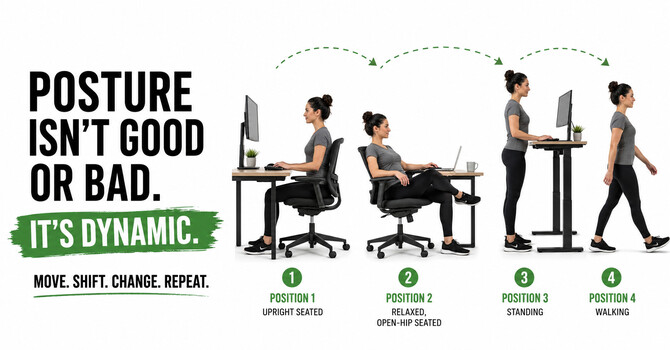
How long you stay in one position.
How active you are.
How strong and conditioned your body is.
How well you recover.
And how well you sleep.
None of that is particularly exciting advice.
But the boring health stuff tends to matter.
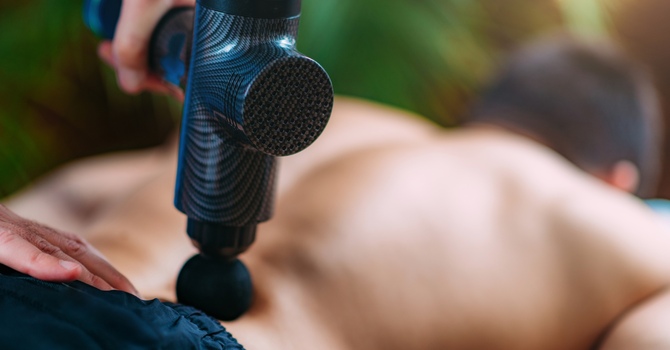
Move regularly. Exercise. Build strength. Get adjusted. Change positions. Sleep well. Recover.
You don’t need to do all of it perfectly. You just need to do more of the good stuff, more often.
Give your body regular opportunities to do what it was built to do.
MOVE.
And if waking up stiff has become a regular part of your morning, ask Dr. Chris about it at your next visit or reply to this email with your questions. Sometimes when and how the stiffness shows up can tell us something too.
Be well and be awesome,
Dr. Chris
References
Adams MA, Dolan P, Hutton WC. Diurnal variations in the stresses on the lumbar spine. Spine. 1987.
Poor sleep quality is strongly associated with subsequent pain intensity in patients with acute low back pain. Arthritis & Rheumatology. 2014.
Feller D, van den Berg R, Enthoven WTM, et al. The association of spinal morning stiffness with lumbar disc degeneration and C-reactive protein: The Back Complaints in Older Adults (BACE) study. Osteoarthritis and Cartilage Open. 2024.
Gerhart JI, Burns JW, Post KM, et al. Relationships Between Sleep Quality and Pain-Related Factors for People with Chronic Low Back Pain: Tests of Reciprocal and Time of Day Effects. Annals of Behavioral Medicine. 2017.
Hayden JA, Ellis J, Ogilvie R, et al. Exercise therapy for chronic low back pain. Cochrane Database of Systematic Reviews. 2021.
Kovacs FM, Abraira V, Peña A, et al. Effect of firmness of mattress on chronic non-specific low-back pain: randomised, double-blind, controlled, multicentre trial. The Lancet. 2003.
Matre D, Hu L, Viken LA, et al. Experimental Sleep Restriction Facilitates Pain and Electrically Induced Cortical Responses. Sleep. 2015.
Sadeghi A, Rostami M, Khanlari Z, et al. Effectiveness of muscle strengthening exercises on the clinical outcomes of patients with knee osteoarthritis: A randomized four-arm controlled trial. Caspian Journal of Internal Medicine. 2023.
Snook SH, Webster BS, McGorry RW, et al. The reduction of chronic nonspecific low back pain through the control of early morning lumbar flexion. A randomized controlled trial. Spine. 1998.
Thorp AA, Kingwell BA, Owen N, Dunstan DW. Breaking up workplace sitting time with intermittent standing bouts improves fatigue and musculoskeletal discomfort in overweight/obese office workers. Occupational and Environmental Medicine. 2014.
Wing P, Tsang I, Gagnon F, et al. Diurnal changes in the profile shape and range of motion of the back. Spine. 1992.